

Voice, Engagement and Choice Lead to Learning
 April 08, 2026
A tale as old as time. You’ve spent your Sunday night fueled by cold coffee and a dream, creating a lesson plan so beautiful it belongs in a museum. You walk into class, ready to change lives, and ...
Student A: “Does this have to be a full page?”
Student B: Staring at the clock with the intensity of a person waiting for a microwave Hot Pocket to finish.
Student C: “Wait, is this graded?”
It’s deflating. It’s like preparing a lavish holiday meal only to have your guests ask for a bowl of cereal instead. As a teacher, you have planned, prepped and served something meaningful, but no one is ready to dig in!
But here’s the inside scoop: Hand them the keys and let them drive. When students have a say in where the learning goes and how they get there, they take ownership, they wake up, and suddenly they are in the driver's seat because it matters to them.
The ‘Buy-In’ Factor: Covert Operation Engagement
Let’s be real — choice is basically the ultimate classroom management “cheat code.” When a student gets to pick their own topic, the usual power struggle dissolves into thin air. Why? Because it’s no longer your annoying task; it’s their learning endeavor.
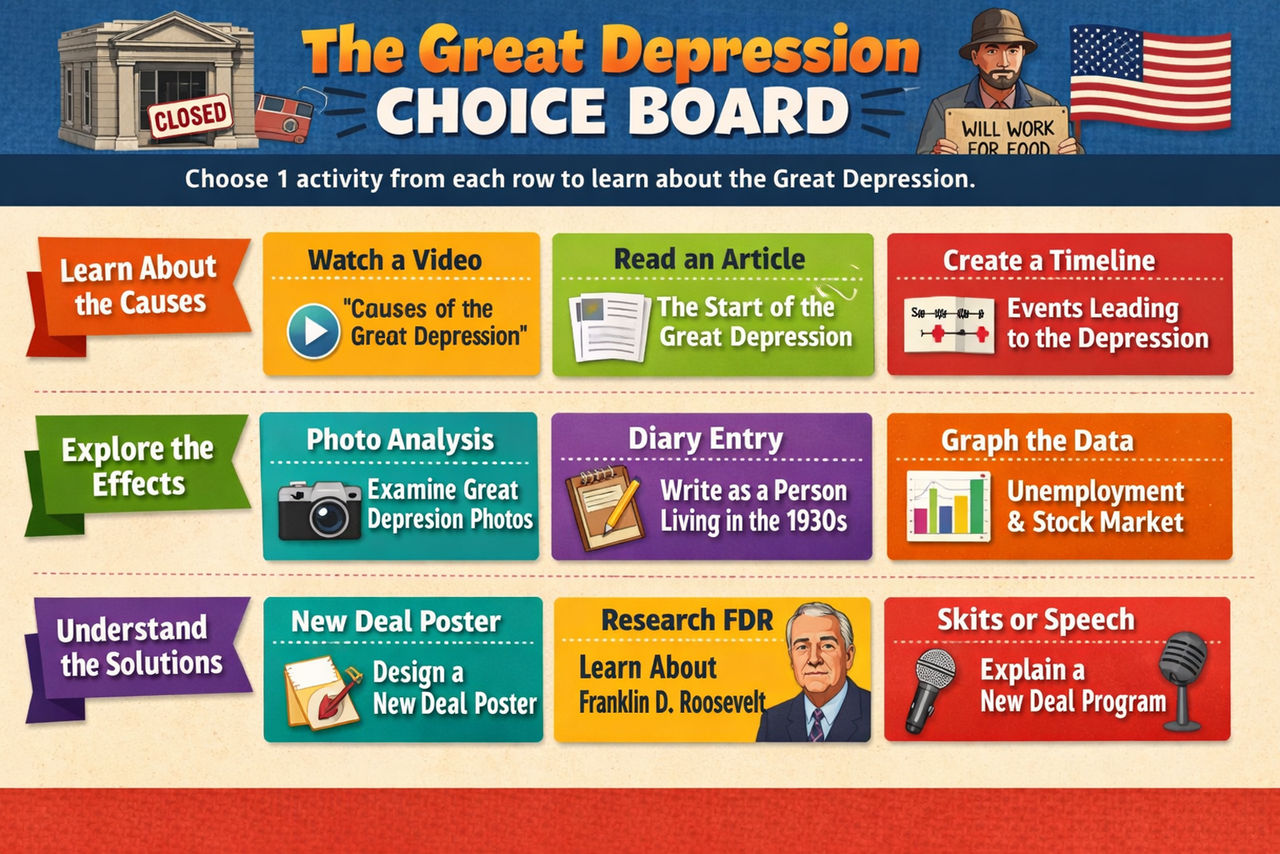
When a student chooses to record a true-crime style podcast about the Great Depression instead of writing another five-paragraph essay, something magical happens. They aren't just “doing another class assignment”; they’re being creators. It’s the difference between being told to eat your broccoli and getting to choose which dipping sauce you want. Autonomy is a potent incentive.
Differentiation (Without Losing Your Mind)
We’re constantly told to “differentiate,” which usually sounds like “please create 30 tailor-made versions of this worksheet by tomorrow morning.”
Choice flips the script. Instead of you doing the heavy lifting, you provide a Learning Menu. One set of high standards but four ways to get there:
The Wordsmith: Write a scathing “Open Letter” to a historical figure.
The Director: Create a storyboard for a Netflix adaptation of this chapter.
The Architect: Build a 3D digital model or a Minecraft version of the cell.
The Influencer: Create a series of “Day in the Life” TikTok scripts for a character.
The goal is the same, but the path is theirs. It’s differentiation that doesn’t end with you crying in the copy room. Now, don’t get me wrong, when the goal of the writing lesson is to create a five-paragraph essay, there isn’t a whole lot of wiggle room to get creative; sometimes, they need to write that essay! But adding a little choice along the way will give them some agency on how they get there.
Prepping for the ‘Grown-Up’ World
In the real world, my boss doesn't hand me a worksheet with 20 multiple-choice questions about how to fix a printer. I must assess my strengths and manage my own frustration levels.
By giving students choices— even tiny ones, like “pick any 10 problems out of these 15” — we’re building those executive functioning muscles. We’re teaching them how to be learners, not just professional “direction-followers.”
How to Start (Without the Stress)
You don’t have to transform your classroom into a classroom adventure zone by Monday. Just try the Choice of Two.
“You can write the summary, OR you can draw a comic strip of the main events.”
“You can read the article about space OR the one about deep-sea creatures.”
Watch the energy shift. You’ll find that when you give up a little bit of control, you get back a whole lot of peace. And maybe, just maybe, Student B will stop looking at the clock.
Stephanie Jaskolski is an English language arts teacher at Woodhaven Upper Elementary in Woodhaven-Brownstown School District.